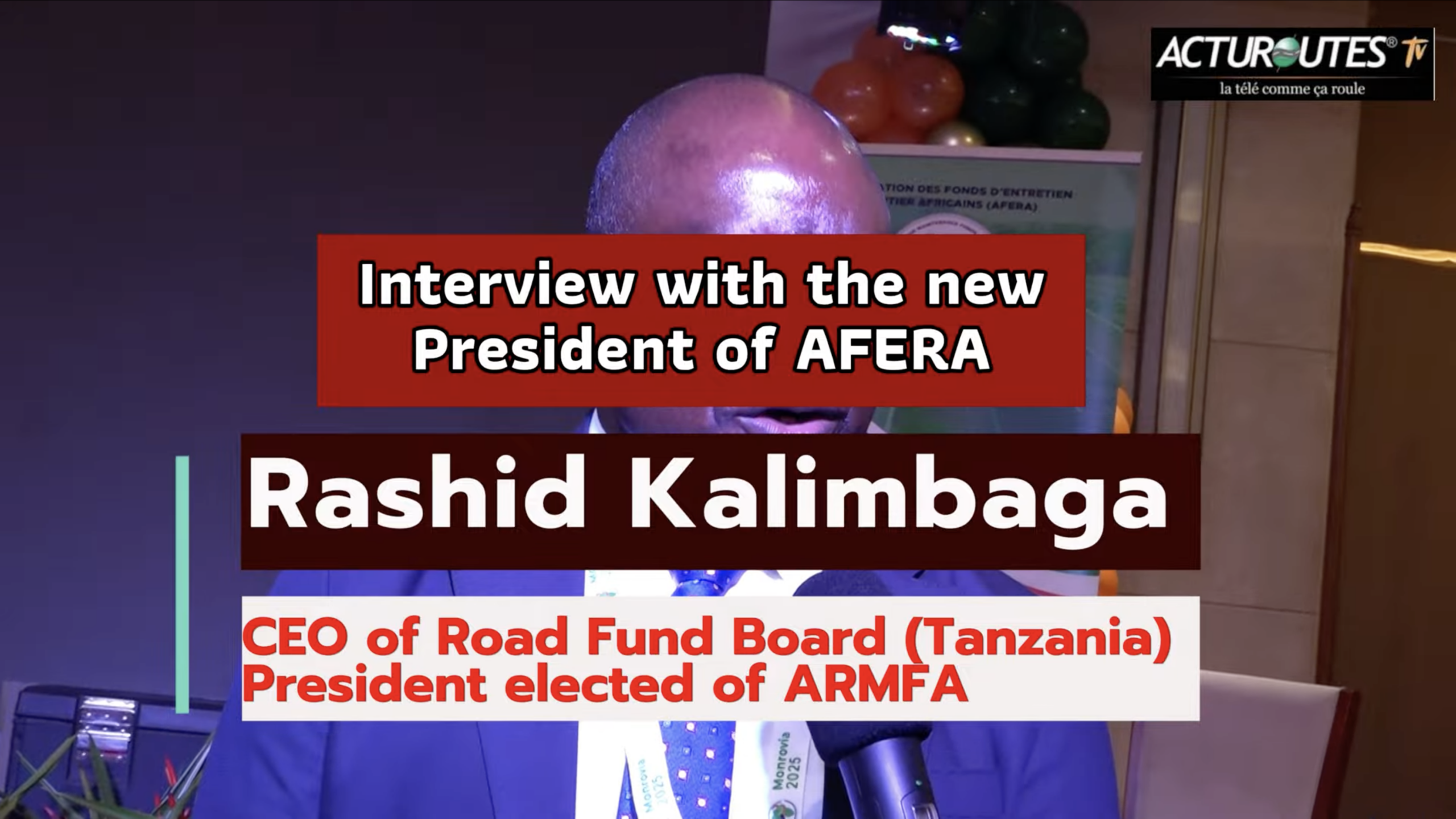
ARMFA-AFERA NEW DYNAMIC
Performance of Road Funds and Capacity Building: ARMFA-AFERA’s New Dynamics
During the 22nd ARMFA AGM, a key presentation focused on the Performance of Road Funds and Capacity Building, highlighting the need for institutional reforms, strategic action, digital transformation, and stronger regional coordination.
The discussions reaffirmed ARMFA’s core mission to improve the management of Road Funds in Africa, promote sustainable road infrastructure, and strengthen institutional and technical capacity across member countries.
Emphasis was placed on enhancing governance, efficiency, transparency, and accountability, including the development of performance monitoring systems, stronger public–private collaboration, and optimized resource management.
A major milestone of the AGM was the introduction of ARMFA’s new strategic and scientific dynamic through the engagement of a Scientific Committee.
This initiative will integrate research, academic expertise, and practical management experience to support evidence-based decision-making and improve the effectiveness of Road Maintenance Funds across Africa.
PRESIDENT OF ARMFA-AFERA PRESENTATION (click to open)
CHAIR OF THE SCIENTIFIC COMMITTEE OF ARMFA PRESENTATION (click to open)
EXECUTIVE SECRETARY OF ARMFA-AFERA PRESENTATION (click to open)
Technical & Financial Partners Panel
Financial and Technical Partners
The 22nd ARMFA–AFERA General Assembly featured a high-level dialogue bringing together ARMFA, Technical and Financial Partners, and Member States to strengthen governance, resilience, and sustainable financing of road infrastructure across Africa.
Discussions addressed key challenges facing road maintenance, including limited funding, inconsistent standards, weak project preparation, data gaps, and governance constraints.
Partners emphasized climate resilience, innovative infrastructure technologies, stronger regional coordination, and institutional stability as essential to attracting sustainable financing. Successful examples such as the SRMPA programme, the Global Gateway corridors initiative, and the Namibian Road Fund model demonstrated the impact of strong governance and clear technical standards.
The session concluded with a call to prioritize maintenance-first policies, harmonize standards, strengthen cooperation, and position climate finance as a central strategy for Africa’s road sector.
EU-PRESENTATION (Click to Open)
AFDB-PRESENTATION (Click to Open)
SSATP
RRAM Pillar 4
The session led by the SSATP team focused on Resilient Road Asset Management (RRAM) Pillar 4 and highlighted the increasing vulnerability of Africa’s road infrastructure to climate change. Flooding, erosion, and traffic disruptions are contributing to annual losses estimated between USD 391 billion and USD 647 billion. At the same time, only 38% of road maintenance needs are currently funded, and fewer than one-third of countries operate fully functional Road Asset Management Systems (RAMS).
Presented by Ms. Oceane Keou, Head of RRAM Pillar 4, and Mr. Jose Cordovilla, Head of the TYPSA team, and moderated by Mr. Gérald Fuller of the European Union, the session stressed that resilience must be viewed as a strategic investment rather than an additional cost. Integrating climate considerations into planning, design, financing, and maintenance is now critical to ensuring the continuity and sustainability of transport services.
The panel called for a shift from project-based to systemic planning, from corrective to preventive maintenance, and from intuitive decision-making to data-driven management supported by RAMS. Findings from the SSATP continental study further emphasized the need to modernize governance structures, reduce dependence on unpredictable funding, strengthen technical capacity, and advance a Next Generation Road Fund Model.
Through the RRAM framework, SSATP presented a life-cycle approach to road asset management that combines climate-informed planning, performance-based maintenance, digital tools, and institutional strengthening. The session concluded with a strong call for predictable financing, enhanced Road Fund autonomy, expanded use of data systems, and sustained collaboration with technical and financial partners to implement resilience reforms.
SSATP PILLAR 4 RRAM PRESENTATION (Click to Open)
GOVERNANCE
NAVIGATING GOVERNANCE
The panel focused on enhancing governance, inclusiveness, and transparency within Road Funds.
Discussions examined how to better integrate road users, the private sector, and women into governance structures, while improving accountability and clarifying the separation between Road Funds and technical agencies. Panelists noted ongoing challenges, including limited stakeholder inclusion and inconsistent transparency practices.
Case studies from Côte d’Ivoire and Cameroon highlighted progress toward more inclusive, mixed public-private governance models.
The session concluded with recommendations to:
- Broaden board representation
- Formalize community participation
- Strengthen institutional clarity
- Leverage digital platforms to improve transparency.
MAURICE NIATY-MOUAMBA: Road Maintenance Funds Governance (click to open)
PAUL ERIC LIA: Governance, innovative financing and climatic resilience (click to open)
FINANCING
SUSTAINABLE FINANCING
The Finance Panel focused on shaping a sustainable financing architecture to respond to growing road maintenance needs across Africa. The session explored how Road Funds can diversify resources, adapt to the post-fuel era, leverage Public-Private Partnerships (PPPs), and attract climate finance.
Discussions highlighted the risks of heavy dependence on fuel levies, particularly in the context of the energy transition and the rise of electric vehicles. Participants also noted the underutilization of climate finance and limited capacity to structure effective PPP arrangements.
Case studies from Guinea, Mozambique, and Sierra Leone demonstrated emerging efforts toward innovation and reform.
The panel emphasized the urgent need for:
- Diversification, including green taxation mechanisms, climate finance mobilization, green bonds
- Electronic Vehicle EV-specific taxation
- PPP-based maintenance models
- Broader road tax reforms.
The session concluded with a clear message: sustainable and resilient road maintenance financing requires innovation, diversification, and forward-looking policy reforms.
MOHAMED DOUTY – MODELS FOR FINANCING TOLL AND WEIGHING STATIONS (click to open)
BENITANY RANDIMBY -FUTURE OF ROAD MAINTENANCE IN THE ERA OF EV AND EMERGING TECHNOLOGIES (click to open)
DIGITILISATION
Smart Roads: Driving Digital Transformation
The Digitalization Panel focused on accelerating the adoption of digital solutions to improve efficiency, transparency, and planning across African Road Funds. Panelists from Kenya, Senegal, Liberia, Tanzania, and Madagascar highlighted challenges including lagging digital adoption, underused or non-existent Road Asset Management Systems (RAMS), and disconnected systems.
Case studies showcased successful initiatives: Kenya’s national RAMS, Tanzania’s advanced digital collection system, and Senegal’s progressive digitalization efforts.
Discussions emphasized the value of e-payments as an anti-fraud tool, RAMS for objective project prioritization, and cybersecurity.
Key recommendations included:
- Generalizing RAMS
- System interoperability
- Data Standardisation
- 100% digital tolling and weighing systems to strengthen efficiency and accountability.
RAMS RFA NAMIBIA : Sophia Tekie Namibia (click to open)
COST ESTIMATION AUTOMATION – RESILIENT AND SUSTAINALE INFRASTRUCTURE: Victor Odula (click to open)
CLIMATE RESILIENCE
ROADS THAT WITHSTAND
The Climate Resilience Panel focused on identifying solutions to make Africa’s road networks more resilient to extreme weather events. Panelists from Namibia, Senegal, Angola, Malawi, and the DRC discussed challenges including outdated technical standards, underinvestment in preventive maintenance, insufficient drainage, erosion, landslides, and unreliable climate data.
Case studies highlighted practical approaches: dryland road designs in Namibia, coastal infrastructure solutions in Angola, landslide mitigation in the DRC, and cyclone preparedness in Malawi.
Key recommendations:
- Updating technical standards
- Reinforcing hydraulic structures
- Mobilizing climate finance
- Establishing a Continental Resilience Observatory to support data-driven planning and adaptation.
RESILIENCES DES INFRASTRUCTURES ROUTIÈRES FACE AUX IMPACTS CLIMATIQUE(click to open)
CLIMATE RESILIENCE CYCLE – CASE STUDY NAMIBIA (click to open)
TRANSPORT AND CORRIDORS
AN INTERCONNECTED AFRICA
The Transport and Corridors Panel focused on optimizing the management, harmonization, and financing of Africa’s regional transport corridors.
Discussions addressed challenges such as:
- Persistent vehicle overload
- Fragmented governance
- Lack of regional maintenance mechanisms, which threaten corridor efficiency and sustainability.
Panelists from Niger, Central African Republic, Togo, and Zambia highlighted corridors as key economic levers but noted risks from rapid infrastructure degradation and inconsistent standards. Case studies showcased strategic corridor management in Zambia, overloading challenges in Niger, and the digitization of weighing systems in Togo.
The panel recommended:
- Establishing regional maintenance funds
- Harmonizing weighing and electronic toll systems
- Integrating Road Maintenance Funds into corridor governance to ensure sustainable and efficient corridor operations.